

Intimacy used to be measured in shared rooms, long calls and the small rituals of seeing someone regularly. Now it can arrive as a voice note on a commute, a message sent across time zones, or a video call that turns a solitary evening into a conversation. The screen has not made closeness obsolete. It has changed its timing, its cues and, sometimes, its price.
The useful question is not whether online connection is “real.” It is what kind of relationship a particular technology helps people build-and what it makes harder. Digital intimacy works best when a tool carries attention between people. It thins out when the tool itself becomes the main event.
Closeness now has more than one rhythm
Messaging allows relationships to unfold in fragments: a photo from the grocery store, a quick check-in before a meeting, a thoughtful reply hours later. That rhythm can keep friends and partners present in one another’s ordinary days without requiring them to share a schedule or location. A group chat can also create a shared social room for people separated by distance, disability, work or caregiving responsibilities.
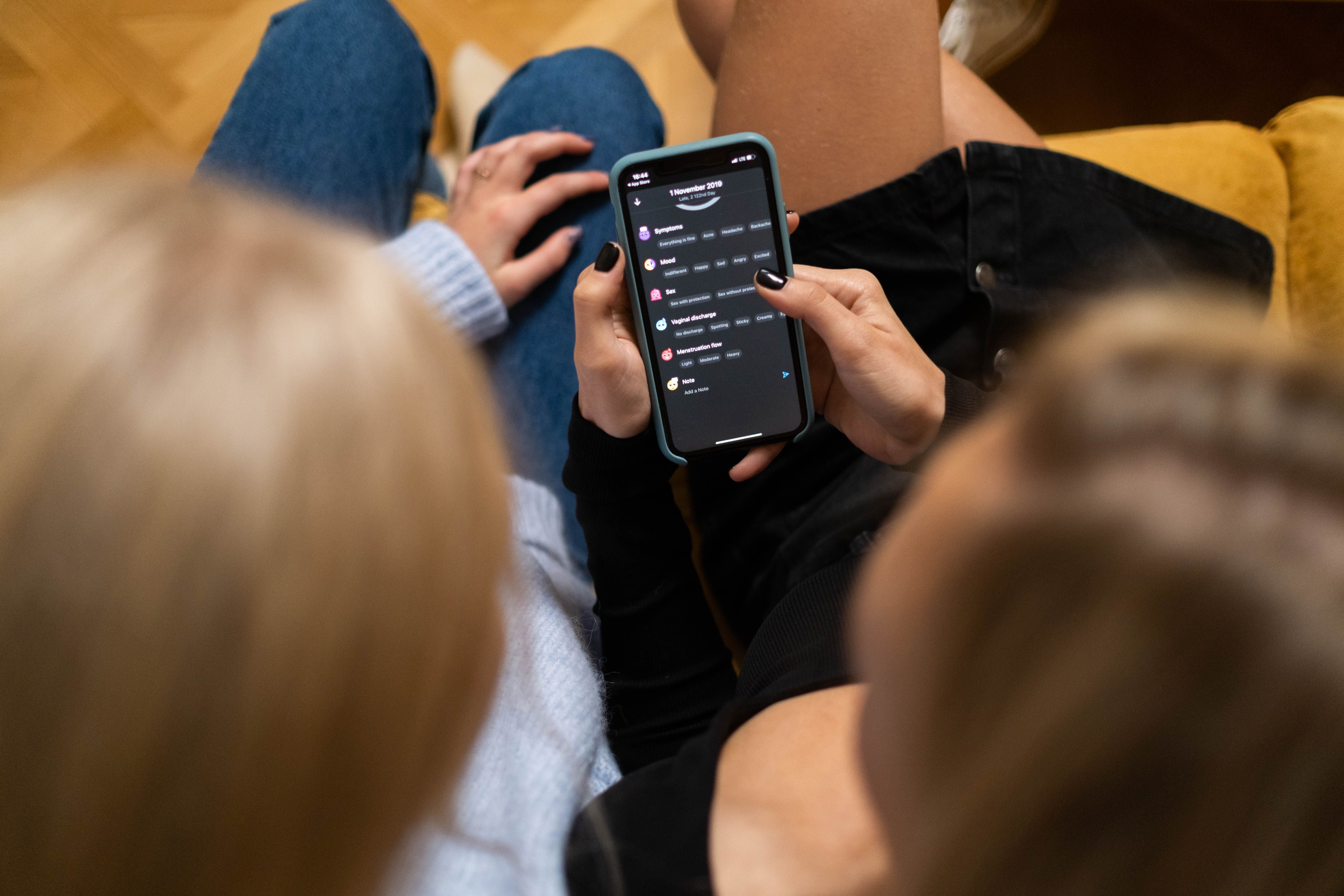
There is evidence that young people themselves experience this as more than convenience. In a 2022 survey of U.S. teens, Pew Research Center found that 80% said social media made them feel more connected to what was happening in friends’ lives, and 67% said it gave them a place to find support in difficult times. Yet the same survey found 38% felt overwhelmed by online drama and 31% said social media had made them feel excluded. The same environment can offer belonging and expose its absence.
That contradiction is easy to miss when debates focus on hours spent online. A message exchanged with a close friend is not equivalent to an hour of passive scrolling, even if both occupy the same screen. Nor does an active conversation automatically become nourishing: pressure to reply instantly can make availability feel like an obligation.
The device can carry attention-or take it away
A systematic review by Kristiina Tammisalo and Anna Rotkirch, published in 2022, examined 70 peer-reviewed articles covering 73 studies of information and communication technology in family relationships. Its central distinction is practical: private device use in another person’s presence and “technoference” were mostly associated with negative outcomes, while communication between family members and using technology together tended to show positive effects. Richer media that more closely resemble face-to-face interaction were linked with stronger positive outcomes.
That is a useful counterweight to the claim that phones inevitably damage intimacy. The researchers’ review does identify real risks-displaced attention, conflict and relationship stress-but it also suggests that *how* people use technology matters. A video call to a grandparent and a phone repeatedly checked while a partner is speaking are not the same social act.

I think the most telling measure is whether a person feels attended to, not whether the phone is physically present. A device on the table can help two people share music or plan a visit; it can also split a conversation into competing audiences. Small agreements-putting notifications away during meals, asking whether now is a good time to talk, or saying “I’ll reply tomorrow”-protect attention without treating technology as a villain.
Digital intimacy includes paid and deliberately bounded encounters
Not every meaningful online interaction is a friendship or a romance. People may seek company, flirtation, conversation or fantasy through a service designed to make a one-to-one encounter possible remotely. For example, escort München is a commercial service whose website describes live “cyber dates” as an online form of intimate companionship. That is one illustration of a broader change: the screen can mediate not only existing relationships, but also clearly framed encounters between people who did not already know each other.
Paid or role-based intimacy should not be confused with mutual commitment outside the terms of the encounter. But neither does the commercial setting make every conversation emotionally empty. The important distinctions are honest expectations, consent, privacy and the ability to end an interaction. Digital settings can make boundaries easier to state; they can also make it tempting to assume that a polished profile or live video reveals more about a person than it really does.
For anyone choosing this kind of connection, the sensible questions are concrete: What is included? What information is collected or shared? Can either person stop? Are images or recordings handled with clear permission? Intimacy depends on trust, and trust online needs more explicit boundaries because fewer contextual cues are visible.
Virtual reality adds presence, not proof of closeness
Virtual reality pushes mediated connection beyond a face in a rectangle. Avatars can share a space, gesture and look toward one another; the experience may feel more embodied than text. But immersion is not a shortcut to trust. A person can feel present with someone and still know little about their intentions, habits or care for them over time.

A preregistered experiment published in 2022 offers a useful, limited test. Researchers randomly assigned 272 previously unacquainted university students to meet through text, audio, video or VR using a structured conversation exercise. Participants in video and VR reported similar levels of closeness; both outperformed text on several measures. This does not show that headsets create lasting relationships-the study involved a short, guided interaction-but it does challenge the idea that virtual contact must feel emotionally thin.
My read is that VR’s promise is not “better than real life.” It is another option for people who want shared activity or richer nonverbal cues when meeting physically is difficult. The format can add a sense of space and presence, but repeated, reciprocal attention still does the relationship-building.
A better test than screen time
Before judging a digital interaction, ask what it is doing for the relationship. Is it helping someone feel remembered, understood or included? Does it give both people room to respond at their own pace? Or is it turning access into surveillance, comparison or a demand for constant availability?
Those questions are more useful than a blanket rule to spend less time online. Technology can help people maintain friendships across distance, find communities they cannot easily access locally, and make space for forms of companionship that suit their circumstances. It can also crowd out a conversation happening beside us. Neither outcome is built into the phone; both are shaped by design, context and the boundaries people negotiate.
Digital intimacy is not a lesser copy of human connection. It is connection with different affordances and different risks. The goal is not to make every relationship digital, or to purge screens from private life. It is to use them in ways that leave people feeling met-not merely reachable.