
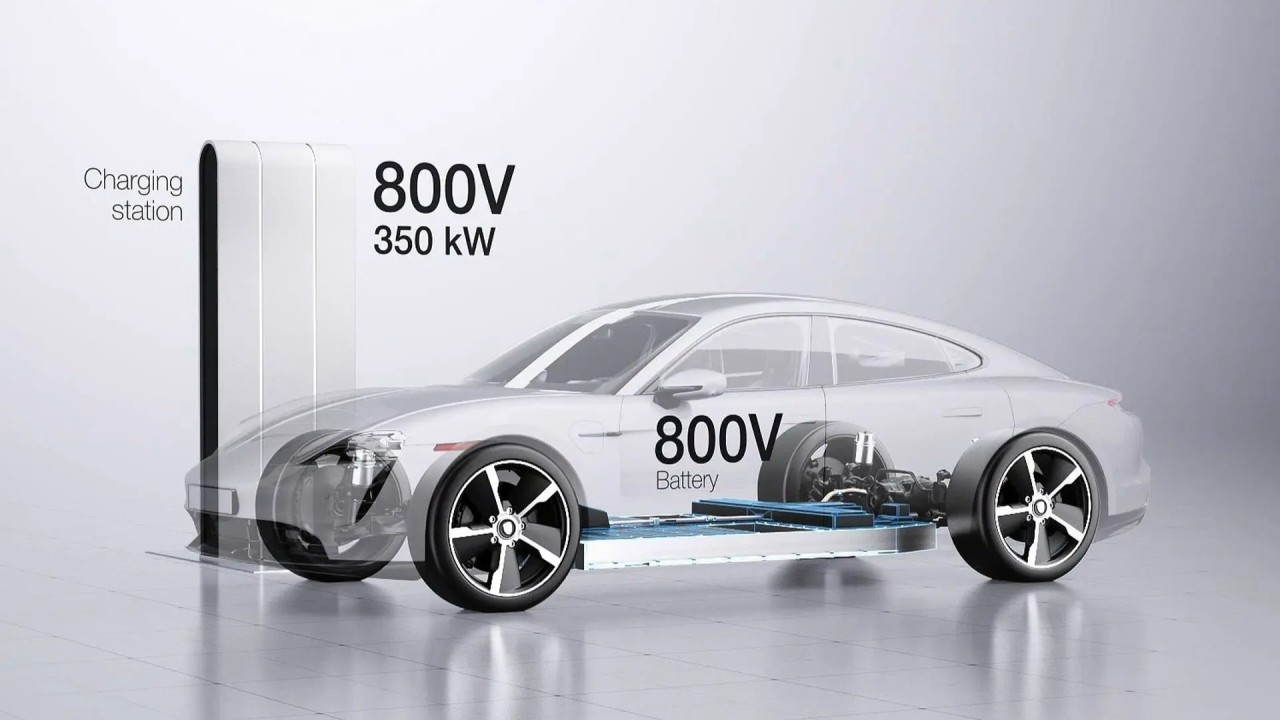
Eight-hundred-volt electrical systems are becoming a defining feature of the newest generation of electric vehicles, moving from technology once associated with expensive performance cars into family SUVs, compact luxury sedans and broader vehicle platforms.
Hyundai and Kia already use high-voltage charging across several mainstream EVs, while Audi, BMW, Mercedes-Benz and Porsche are rolling out newer architectures that push peak DC charging toward 300 kW, 400 kW and beyond.
The change is not simply a race for a larger charging number. Higher voltage lets an EV move the same amount of electrical power with less current, which can reduce heat and electrical losses while making very high charging rates easier to manage.
For drivers, the goal is shorter stops on long trips. For automakers and suppliers, it means redesigning the high-voltage electrical system around faster charging, efficiency and thermal control.
800-volt charging is reaching a wider range of EVs
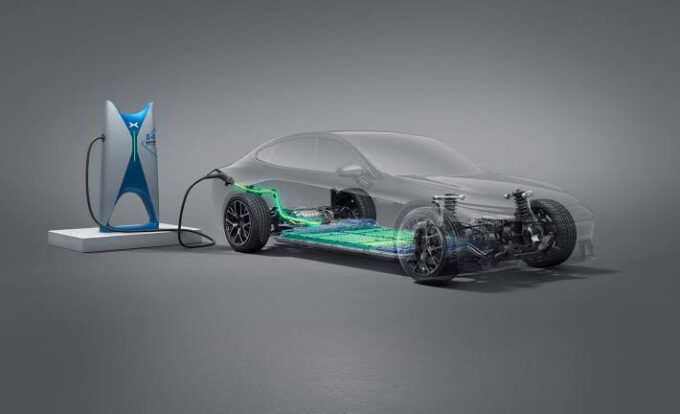
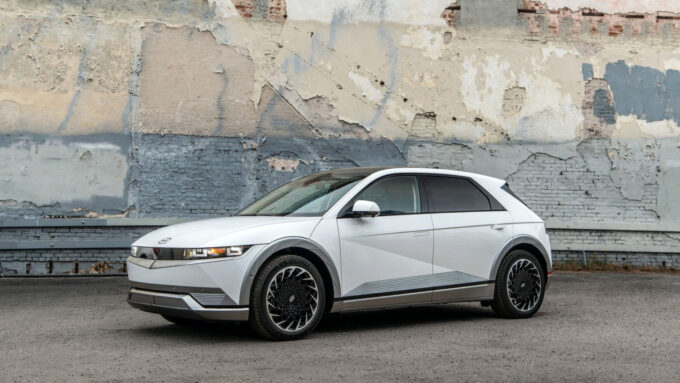
The clearest change in 2026 is the variety of vehicles using the technology. Hyundai’s E-GMP architecture brought 800-volt charging to vehicles such as the IONIQ 5 years ago, and Hyundai says the model can charge from 10% to 80% in 18 minutes on a 350 kW DC charger under suitable conditions.
Kia lists a 10% to 80% time of as little as 24 minutes for most versions of the 2026 EV9 on a 350 kW charger, putting high-voltage charging into a three-row family SUV.
| Vehicle or platform | Charging capability | Manufacturer charging claim |
| Hyundai IONIQ 5 / E-GMP | 800 V system, 350 kW-class charger support | 10% to 80% in 18 minutes |
| Kia EV9 / E-GMP | 800 V-class architecture, 350 kW charger support | 10% to 80% in as little as 24 minutes |
| Audi A6 e-tron / PPE | Up to 270 kW DC | 10% to 80% in 21 minutes |
| Mercedes-Benz CLA | 800 V architecture, up to 320 kW DC | Up to 300 km of range added in 10 minutes in the Canadian specification |
| BMW iX3 / Neue Klasse | 800 V architecture, up to 400 kW DC | About 175 miles of range added in 10 minutes in the U.S. specification |
| Porsche Cayenne Electric | 800 V architecture, up to 390 kW and 400 kW under specified conditions | 10% to 80% in under 16 minutes |
Moving from 400 volts to 800 volts allows EVs to deliver high power with less current, reducing heat and electrical losses while supporting faster DC charging.
The change affects the entire high-voltage system, including inverters, converters, charging hardware and control electronics.
That also raises reliability demands for components such as the automotive PCB, which must operate reliably under demanding electrical and thermal conditions.
Porsche’s electric Macan shows the technology in practice. Its 800-volt PPE platform supports DC charging at up to 270 kW and can split the battery into two 400-volt sections when using 400-volt charging stations.
Audi’s A6 e-tron uses the same PPE architecture, reaches 270 kW and can charge from 10% to 80% in 21 minutes.
Mercedes-Benz has brought 800-volt technology to the CLA, which supports charging at up to 320 kW and can add up to 325 km of WLTP range in 10 minutes. BMW’s Neue Klasse iX3 pushes charging higher still, reaching 400 kW and adding an estimated 175 miles of range in 10 minutes.
Peak charging power does not tell the whole story
An 800-volt badge does not guarantee the fastest charging experience. Battery chemistry, cell design, pack cooling, software limits, starting state of charge and battery temperature all determine how much power a car can accept and for how long.
A vehicle that briefly reaches a very high peak but rapidly tapers can spend more time at the charger than one that holds strong power through a larger part of the session.
That is why 10% to 80% time and energy added in 10 minutes are often more useful than peak kW alone. Porsche says the 113 kWh battery in the Cayenne Electric can sustain 350 to 400 kW up to around 50% state of charge under suitable conditions.
The company quotes a 10% to 80% time of less than 16 minutes, showing how the charging curve, not just the maximum number, determines the stop.
Drivers also need the charger to supply the voltage and power the vehicle expects. The U.S. Department of Energy’s Alternative Fuels Data Center notes that public DC fast-charging equipment can reach outputs up to 500 kW, but station capability still varies widely. Anyone comparing EVs should look at the charging network they are likely to use, not only the specification sheet.
Charging networks are beginning to match the new vehicles
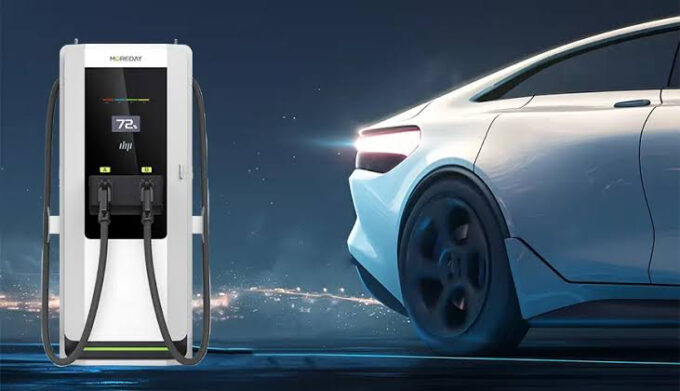
The infrastructure side is moving in the same direction. Tesla says its V4 cabinet supports vehicle architectures from 400 to 1,000 volts and can deliver up to 500 kW to passenger vehicles. Tesla also lists Cybertruck charging at up to 325 kW at V4 Superchargers.
A wider voltage window matters because a high-power station that can serve both 400-volt and 800-volt cars reduces the compatibility trade-off for network operators.
Compatibility inside the vehicle still matters. Hyundai’s E-GMP can use its motor and inverter to boost voltage when charging from 400-volt infrastructure.
Porsche uses pack-splitting strategies on newer models.
BMW says the iX3 can also charge from 400-volt DC stations through its battery-management system.
What Are the Benefits of an 800-Volt EV Architecture?
Faster charging is the most visible benefit of an 800-volt EV architecture, but it is not the only one. Raising voltage allows the electrical system to deliver high power with less current, helping automakers manage heat and energy losses across the drivetrain.
For manufacturers, that can support several improvements:
- Higher DC fast-charging rates without relying on extremely high current.
- Lower electrical losses in parts of the high-voltage system.
- Easier thermal management during demanding driving and charging conditions.
- Potentially lighter high-voltage cabling where the vehicle design allows lower-current conductors.
- More efficient power electronics when the architecture is combined with technologies such as silicon-carbide inverters.
These advantages are particularly useful for electric SUVs and vehicles with large battery packs. More energy can be added during a short charging stop, reducing one of the practical disadvantages of carrying a larger battery on long journeys.
800-Volt EVs Still Depend on the Right Fast Charger
An 800-volt system does not guarantee maximum charging speed every time a vehicle is plugged in.
The battery must be at a suitable temperature, its state of charge matters, and the DC fast charger must be capable of supplying the voltage and power the car can accept.
This is why buyers should look beyond the advertised peak charging rate. A vehicle that reaches 400 kW briefly is not necessarily faster over an entire charging session than one that maintains a lower rate for longer.
What to Check Before Buying an 800-Volt EV
Drivers comparing new electric vehicles should focus on real charging performance rather than the 800V label alone. Useful specifications include:
- 10% to 80% DC fast-charging time;
- maximum DC charging power;
- battery preconditioning before fast charging;
- charging performance on 400-volt stations;
- availability of high-power chargers on regular routes.
The spread of 800-volt EV platforms in 2026 shows where the industry is heading.
The technology is moving from premium performance models into sedans, crossovers and family SUVs, while new charging equipment is increasingly capable of delivering the power these vehicles can use.
At the End
Eight-hundred-volt systems are no longer limited to a small group of high-end electric cars. New platforms from BMW, Porsche, Mercedes-Benz, Audi, Hyundai and Kia show that faster high-voltage charging is spreading across sedans, crossovers and family SUVs.
The real advantage will depend on more than peak charging power. Battery temperature, charging curves and access to compatible high-power stations still shape the time drivers spend plugged in.
Even so, vehicles such as the BMW iX3 and Porsche Cayenne Electric, which support charging around 400 kW, show how quickly the technology is advancing.
As charging infrastructure catches up, 800-volt architecture is likely to become an increasingly important benchmark for the next generation of EVs.