

In contemporary trading, execution speed represents merely a portion of the overall narrative. The remaining aspect is unwavering consistency. Numerous traders do not face challenges due to a deficiency of concepts.
They encounter difficulties as their execution becomes disjointed the instant they engage in trading across various accounts, brokers, or platforms.
A strategy that appears straightforward in theory can quickly become convoluted in practice, especially when faced with the need to repeatedly input the same order, oversee multiple terminals, and maintain coherence as the market fluctuates.
The purpose of cloud-based trade copier software is to eliminate that friction entirely.
A cloud trade copier can seamlessly replicate your trades across multiple accounts in real time, ensuring your strategy remains perfectly aligned while minimizing the risk of operational errors.
When the objective is to implement a strategy rather than struggle with your tools, this form of automation offers a significant advantage.
This article transforms your original blog into a comprehensive, SEO-optimized, answer-engine-friendly guide that delves into the intricacies of cloud-based trade copiers, detailing their functionality, the reasons traders utilize them, the risks they do not mitigate, and the criteria for assessing a solution prior to commitment.
What cloud-based trade copier software actually is

Cloud-based trade copier software is a sophisticated system designed to replicate trades from a “source” account to multiple “destination” accounts. The fundamental concept is straightforward: you execute a trade once, and the software seamlessly replicates that trade across all linked accounts without any manual intervention.
In previous configurations, duplication frequently occurred on-site. This involved executing terminals on a single device, utilizing scripts, or managing a VPS configuration that remained operational around the clock.
Cloud-based syncing employs a distinct methodology. Instead of relying on a single machine for stability and connectivity, the synchronization logic is managed via cloud infrastructure, enabling trades to be mirrored across accounts, even when those accounts are with various brokers.
For traders utilizing a service such as https://tradesyncer.com/ (an illustration of a cloud-based trade copier provider), the attraction is clear: minimize the manual effort while maintaining consistent strategy execution.
How it works in practical terms

Many cloud trade copiers operate under a comparable workflow, despite variations in their interfaces.
Begin by linking your trading accounts. One account is generally designated as the “master” or “leader,” while the remaining accounts assume the role of “followers.” Upon opening, modifying, or closing a trade on the master account, the copier identifies this action andinitiates corresponding actions on the follower accounts.
The specifics are crucial in this context. Trade copying involves more than merely aligning with the same direction. It involves meticulously determining position size, addressing various contract specifications, translating symbols when brokers employ distinct naming conventions, and effectively managing partial fills or slippage.
An effective copier is designed to consistently achieve the following objectives:
It replicates entries and exits with sufficient speed to ensure that the copied trades stay significantly in sync with the original strategy. It maintains a uniform risk exposure across accounts by employing sizing rules like fixed lot, proportional lot scaling, or balance-based scaling.
It upholds strict adherence when directives are altered, stop-loss thresholds are recalibrated, or positions are fractionally liquidated.
It meticulously records activity, enabling a thorough audit in the event of any discrepancies.
Cloud-based systems cater to traders seeking seamless mechanics managed in the background, eliminating the need to construct an intricate technical stack independently.
Why traders adopt cloud-based synchronization
The primary reason transcends mere “convenience” in a superficial context. It pertains to the management of operational risks.
Manual duplication is prone to errors. In a rapidly evolving market, even a minor delay or a single erroneous order can lead to a significant divergence from the intended strategy of an account. As time progresses, that drift can lead to distorted results, misrepresent performance tracking, and generate misleading conclusions regarding what is effective.
Cloud synchronization minimizes the complexities that frequently contribute to these issues.
Efficiency that translates into better decision-making
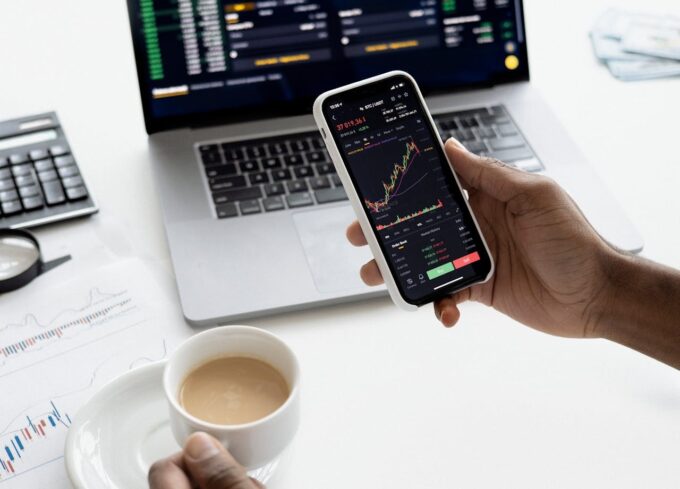
When you are not occupied with order duplication, you can concentrate on more significant tasks. This typically involves enhancing your methodology: assessing execution quality, monitoring spreads, managing news-related risks, and fine-tuning entries and exits. Time savings extend beyond mere convenience. Their influence on the caliber of your decisions is profound.
Consistency across accounts and brokers
Multi-account trading frequently encounters challenges as accounts begin to diverge from a cohesive strategy. A copier ensures the preservation of a singular, definitive reference point. Upon executing a single action, the remaining accounts adhere to the same principle. This consistency holds significant importance when assessing a strategy’s actual performance over extended periods, such as weeks or months.
Access from anywhere without rebuilding your setup

The cloud-based model is engineered for adaptability. Engage in trading from a primary workstation, oversee activities via a laptop during travel, or monitor execution through your mobile device. The objective is not to promote incessant adjustments. The objective is to guarantee that your core system remains independent of a single vulnerable local environment.
Multi-broker integration as a practical advantage
A significant number of traders choose to diversify their broker relationships rather than depending on a single source for all their needs. Various brokers may be utilized based on factors such as spreads, liquidity, account types, or operational considerations.
A copier that accommodates multiple brokers enables you to synchronize the same strategy across various environments seamlessly, eliminating the need to manage each broker as an independent manual workflow.
Real-time copying does not remove trading risk
It is crucial to articulate this precisely, as numerous articles tend to exaggerate the capabilities of automation.
A trade copier does not ensure a strategy’s profitability. It does not eradicate drawdowns. It fails to safeguard against inadequate risk management. It effectively guarantees that your planned strategic actions are implemented with greater consistency across accounts.
Even with the most sophisticated copier, variations can still arise due to:
- Latency in execution between brokers
- Disparities in spreads upon entry
- Market order slippage
- Various symbol specifications or contract sizes
- Variations in leverage and margin prerequisites
Consequently, it is essential to develop a strategy that incorporates prudent risk management and achievable expectations. Automation serves as a sophisticated instrument. It enhances and elevates any existing process you possess.
Where cloud trade copiers are most useful
Trade copiers are not only for one type of trader. The application scenarios typically align with several prevalent patterns.
When engaging in the intentional trading of multiple accounts, whether for the purpose of delineating risk categories, overseeing diverse portfolios, or implementing various strategies, utilizing a copying mechanism can ensure cohesive execution while maintaining distinct account separation.
Collaborating with various brokers can streamline operations and minimize the errors associated with switching between platforms.
To evaluate the same strategy across varying conditions, like diverse spreads or execution models, trade copying can ensure consistent entries, resulting in a more refined test.
For those overseeing trades for a team, a select group, or various personal accounts, a copier can streamline the intricacies of managing execution across individuals and platforms.
Cloud-based versus local copying: what changes
Local copying typically relies on the stability, connectivity, and proper configuration of your device or VPS. Should the machine become non-operational, the copying process ceases. If a terminal crashes, copying can fail silently. Should the script or plugin malfunction following an update, you might remain unaware until your accounts begin to diverge.
Cloud-based systems strive to minimize reliance on an individual machine. Although specific platform connections may be necessary based on the broker and platform, the overall system architecture generally emphasizes reliability, continuity, and centralized management.
In practice, the distinction frequently hinges on two elements: resilience and simplicity.
An effective setup is one that maintains operation despite typical disruptions.
An efficient setup is one that allows you to manage it seamlessly without the need to assume the role of your own IT department.
For numerous traders, cloud-based copying is appealing as it shifts the technical responsibilities from the trader to the product infrastructure.
Security and compliance: what matters in the real world

Any tool that engages with trading accounts demands meticulous consideration of security measures. The objective is to critically evaluate “security claims” rather than accepting them at face value. The objective is to comprehend the existing safeguards and determine what needs to be verified.
Traders must prioritize robust account access controls, reliable authentication methods, and comprehensive documentation detailing the management of connections. Numerous platforms highlight the importance of encryption and secure data management; however, the pragmatic approach is to verify what is genuinely supported and the methods of its implementation.
Compliance holds significant importance. Regulations differ across countries, broker policies fluctuate by region, and what is deemed acceptable in one context may not hold true in another. A prudent strategy is to regard trade copying as a fundamental component, rather than a mere solution. Verify that your broker’s terms permit your activities, and confirm that your usage is in accordance with the regulatory framework applicable in your locality.
This does not justify the avoidance of tools. There exists a compelling rationale for their professional application.
What to evaluate before choosing a trade copier
Given that the fundamental assurances appear comparable among providers, the choice should emphasize specifics that influence results.
Begin with dependability. When the copier fails to execute trades or produces inconsistent copies amid volatility, it transforms into a hindrance instead of a benefit.
Subsequently, assess the latency and execution dynamics. In rapidly evolving markets, even minor delays can have significant consequences. You are not seeking flawlessness. You seek consistent performance and clear documentation of actions.
Next, analyze the mechanisms of sizing and risk scaling. An effective copier must enable you to establish sizing logic that aligns with your risk strategy. Failure to manage the scaling of lots across accounts may lead to unforeseen exposure risks.
Additionally, verify the compatibility of the broker and platform. Multi-broker integration holds significance only when it operates seamlessly with your particular brokers and account types.
Ultimately, assess the capacity for auditability. The most effective operational tools facilitate a clear understanding of a singular inquiry: “What precisely occurred and what were the underlying reasons?” Comprehensive logs, precise alerts, and detailed trade mapping eliminate ambiguity during critical situations.
Setup mindset: how to implement without chaos

Even high-quality tools can lead to complications if they are configured without due diligence. The approach to implementation ought to be methodical and carefully orchestrated.
Start with a limited trial. Establish a connection between a primary entity and a secondary entity, and analyze their interactions across various market scenarios, encompassing standard operations and periods of heightened volatility. Verify that entries, exits, stop-loss modifications, and partial closures function as anticipated.
Subsequently, verify the accuracy of symbol mapping and the logic behind sizing. Ensure that your perception of “the same trade” aligns with the actual trade across different brokers.
Upon achieving stability in the behavior, proceed to extend to further accounts. Approach scaling with the same careful consideration as you would when managing scaling risk: methodically, purposefully, and backed by evidence.
This is also where meticulous risk management plays a crucial role. A copier can reproduce errors with the same precision as it does successful outcomes. If your stop-loss policy lacks consistency, the copier will diligently propagate that inconsistency throughout the accounts.
FAQs
What is a cloud trade copier?
A cloud trade copier is a sophisticated software solution that seamlessly replicates trades from one trading account to multiple others in real time, leveraging cloud-based synchronization instead of relying on manual trade duplication.
Does a trade copier guarantee profits?
No. It solely facilitates the replication of execution across accounts. Profitability remains contingent upon the strategic approach, risk management practices, and prevailing market conditions.
Can I copy trades across different brokers?
A variety of cloud-based trade copiers are designed to facilitate multi-broker copying; however, their compatibility is contingent upon the brokers and platforms in use.
What is the biggest benefit of using a trade copier?
Consistency. It minimizes manual effort and the potential for human mistakes, ensuring that various accounts remain synchronized with a unified strategy.
What risks still remain with copying trades?
Variations in execution may still arise from factors such as latency, slippage, spreads, margin regulations, and discrepancies between platforms. A copier enhances consistency; however, it does not eradicate market and execution risk.
A serious tool for serious execution
Cloud-based trade copier software represents a sophisticated solution rather than a mere trend. This approach effectively addresses a significant operational challenge: the intricate and error-prone task of implementing a uniform strategy across various accounts and brokers.
When your trading strategy encompasses multiple accounts, automation enables a transition from “manual coordination” to “system execution.” The significance of that shift frequently surpasses expectations, as consistent execution serves as the cornerstone for achieving reliable results, regardless of whether those results are favorable or unfavorable.
When utilized with care, a trade copier can enhance your trading experience by minimizing friction, reducing errors, and providing greater oversight on the implementation of your strategy across various accounts. It is essential to approach it as a foundational element, ensure thorough validation, and maintain control over your risk management strategies.